



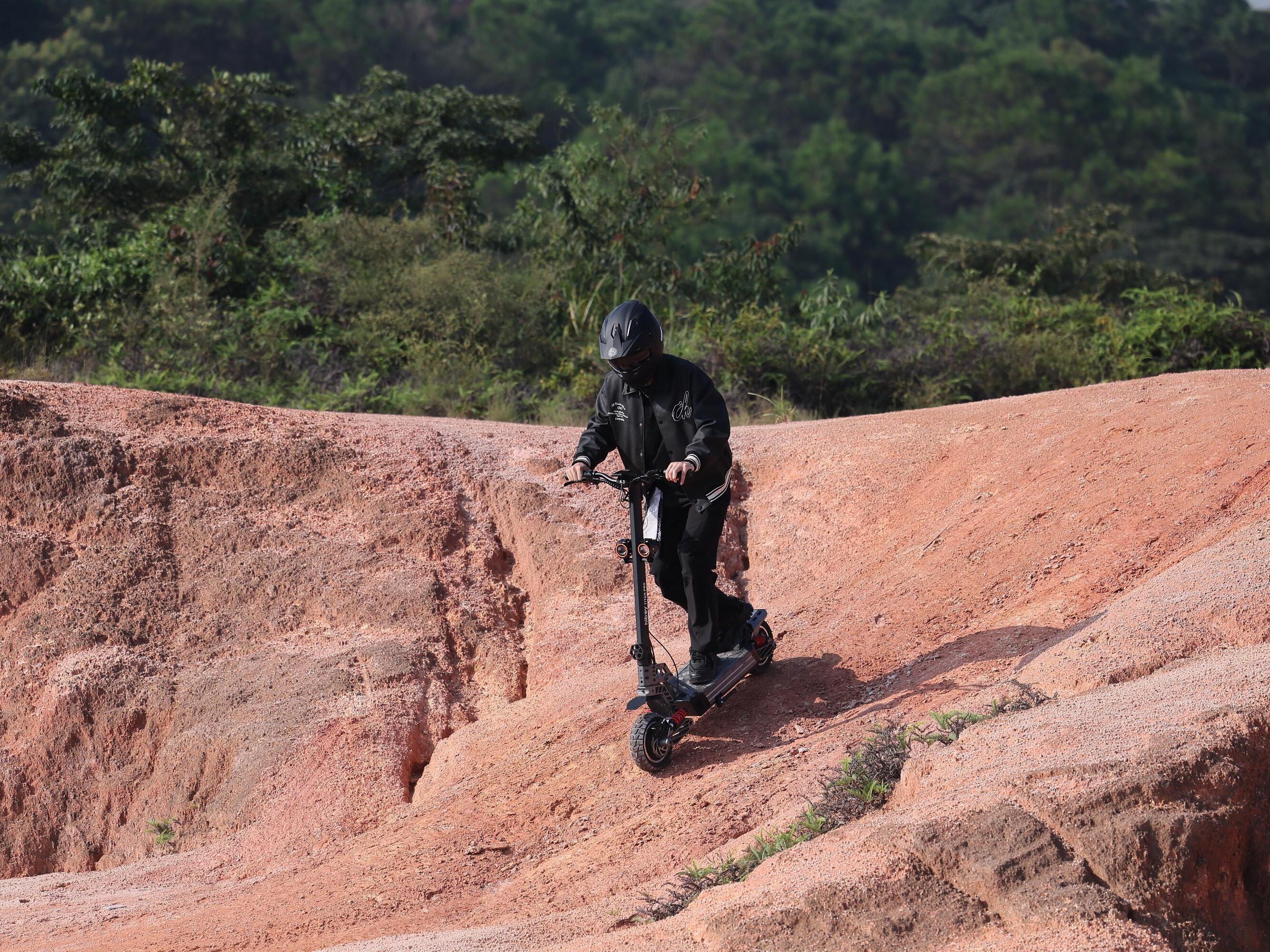
Electric scooters, especially powerful off-road models, are growing in popularity across Canada. From trail riding near Banff National Park to cruising gravel paths in Calgary, riders love the power, torque, and freedom that off-road scooters offer.
But when it comes to street legality in Canada, things can get confusing. Unlike conventional bicycles, electric scooters, especially high-performance ones, aren’t always clear-cut under Canadian law.
This guide will walk you through:
- How electric scooters are regulated in Canada
- Whether off-road scooters are legal on public roads
- What rules vary by province
- Safety tips and alternatives for legal ride-to-work options

How Are Electric Scooters Regulated in Canada?
In Canada, there is no single nationwide law that defines electric scooters. Instead, rules vary by:
- Province
- City or municipality
- Scooter speed and power
Whether the scooter is designed like a bicycle or more like a motorized vehicle
Because of this, an off-road electric scooter that’s powerful off-trail may not be legal on Canadian public roads, even if it’s perfectly safe on private land.
Federal vs. Provincial Rules
Federal Classification
At the federal level in Canada, there isn’t one legal classification for all scooters. Transport Canada sets safety standards for motor vehicles, but many e-scooters fall into a “regulatory gap” because they are neither bicycles nor full motor vehicles.
Province-by-Province Breakdown
⚠️ Important: Electric scooter laws in Canada are regulated primarily at the provincial level, but enforcement and permissions are often handled by municipal pilot programs. Rules can change, so riders should always confirm with local authorities before riding.
Below is a practical overview tailored for Canadian riders.

Ontario
Status: Legal under pilot program (municipal approval required)
- Ontario allows electric kick scooters under a provincial pilot framework.
Key Rules
- Minimum age: 16
- Max speed: 24 km/h (varies by city)
- Allowed on roads ≤ 50 km/h (where permitted)
- Sidewalk riding: Prohibited
- Helmet: Required for riders under 18 (strongly recommended for all)
Off-Road Scooter Legality
High-powered off-road scooters that exceed speed limits (often 32+ km/h) may not be street legal and could be treated as motor vehicles.
Municipal participation matters; cities like Toronto set their own restrictions.
Quebec
Status: Legal with restrictions
- Quebec has established clearer scooter regulations.
Key Rules
- Minimum age: 14 (with helmet required)
- Max speed: 25 km/h
- Allowed on bike paths and roads ≤ 50 km/h
- Mandatory helmet
- Required lights and reflectors
Off-Road Scooter Legality
If your scooter exceeds 25 km/h or lacks required safety equipment, it may not be legal on public streets. Cities like Montreal enforce strict compliance.

British Columbia
Status: Legal in participating municipalities
- BC permits electric scooters under municipal pilot programs.
Key Rules
- Minimum age: 16
- Max speed: 25 km/h
- Allowed on bike lanes and some roads
- Sidewalk riding prohibited
- Helmet required
Off-Road Scooter Legality
Powerful off-road scooters exceeding speed or design requirements are generally not street legal. Cities like Vancouver regulate use locally.
Alberta
- Status: Municipality-based regulation
- Alberta does not have a uniform provincial e-scooter law.
- Cities like Calgary and Edmonton manage e-scooters through local bylaws.
Typical Rules
- Allowed on bike lanes and pathways
- Sidewalk riding restricted
- Helmet strongly recommended
- Speed is typically limited to around 20–25 km/h
Off-Road Scooter Legality
High-speed off-road scooters are generally limited to private property or off-road areas.

Manitoba
- Status: Limited pilot permissions
- Municipal approval required.
- Often limited to shared-use paths
- Speed restrictions apply
- Helmet use encouraged
Off-road scooters exceeding limits are not typically road legal.
Saskatchewan
Status: Restricted
- Generally treated more like motor vehicles unless part of a specific municipal allowance.
- High-powered scooters may require registration if used on public roads.
- Off-road models are usually not street legal.
Nova Scotia
Status: Legal with restrictions
- Max speed around 24–25 km/h
- Helmet required
- No sidewalk riding
Off-road scooters exceeding speed thresholds are typically not permitted on streets.
New Brunswick
Status: Legal with restrictions
- Speed capped at 25 km/h
- Helmet required
- Road and bike lane use is permitted where allowed
Off-road high-powered scooters may not qualify.

Prince Edward Island
Status: Restricted / Local discretion
Regulations vary. Most high-speed off-road scooters are not street legal.
Newfoundland & Labrador
Status: Limited framework
- Generally treated conservatively.
- Off-road scooters exceeding typical commuter specs are unlikely to be street legal.
Territories (Yukon, NWT, Nunavut)
Regulations are less developed and typically handled locally. Off-road scooters are generally safest used on:
- Private property
- Designated trails

Quick Summary
| Province | Street Legal? | Max Speed (Typical) | Off-Road Scooter Legal? |
| Ontario | Yes (pilot) | 24 km/h | Usually No |
| Quebec | Yes | 25 km/h | Usually No |
| BC | Yes (municipal) | 25 km/h | Usually No |
| Alberta | Municipal | 20–25 km/h | Usually No |
| Nova Scotia | Yes | 24–25 km/h | Usually No |
| Others | Limited | 20–25 km/h | Rarely |
The Key Legal Factor: Speed & Power
Most Canadian provinces cap e-scooters at:
- 20–25 km/h maximum assisted speed
Many off-road electric scooters exceed:
- 32 km/h
- 40+ km/h
- High-wattage motors
Once a scooter exceeds provincial thresholds, it may legally be classified as:
- A motor vehicle
- An unregistered vehicle
- Illegal for public road use

When Are Off-Road Electric Scooters Legal?
Typically legal only on:
- ✔ Private property
- ✔ Off-road trails (where permitted)
- ✔ Rural land
- ✔ Designated recreation zones
Not typically legal on:
- ❌ Public streets
- ❌ Sidewalks
- ❌ Urban bike lanes (if exceeding limits)
What Makes a Scooter “Street Legal” in Canada?
In most provinces, to be considered “street legal,” an electric scooter needs to meet certain basic criteria:
- ✔ Designed and intended for road use
- ✔ Maximum assisted speed within local limits (often ≤ 32 km/h)
- ✔ Lights, reflectors, and horn/bell required in some regions
- ✔ Helmet recommended or required
- ✔ Age limits observed
- ✔ Ride only in bike lanes or streets where allowed
If an off-road scooter is built for higher speeds or more power than local laws allow, it may be deemed unsafe or illegal for public roads.

Safety Tips for Canadian Riders
Even in places where scooters are legal, safety matters:
Helmet & Gear
Always wear:
- Helmet (mandatory in many provinces)
- Gloves
- Reflective clothing
Lights & Reflectors
- Ensure you have:
- Front and rear lights (required for night riding)
- Reflectors or reflective stickers
Ride Where Allowed
You should ride on:
- Bike lanes
- Streets with appropriate speed limits
- Trails or private property for off-road models
Avoid Sidewalk Riding
Sidewalk laws vary, but most major Canadian cities prohibit scooters on sidewalks.

Commuter Scooters vs. Off-Road Scooters
Here’s a simple rule:
- City/Commuter scooters → Likely street legal (if within local specs)
- Off-road scooters → Usually not street legal on public roads
If you want a scooter that can serve as both a trail-riding machine and a commuter vehicle, look for models that are certified for road use, have:
- Top speeds aligned with local limits
- Proper lighting and reflectors
- Safety certification
A power rating that complies with local regulations
Before You Ride: Ask These Questions
- What province/city am I riding in?
- Does my scooter meet local power and speed limits?
- Does it have required lights and safety gear?
- Is the riding surface legal for scooters (bike lane, road, trail, sidewalk)?
- Should I carry proof of compliance or purchase documentation?
Answering these helps you ride with confidence and avoid fines.
Final Words
Off-road electric scooters are thrilling, powerful, and ideal for trails or private property, but they are usually not street-legal on public roads in Canada.






Share:
Standard Motor vs Bosch Motor: Why Bosch-Powered Electric Scooters Are Ideal for Canadian Riders
Why Spring Is the Best Time to Start Riding an Electric Bike in Canada